
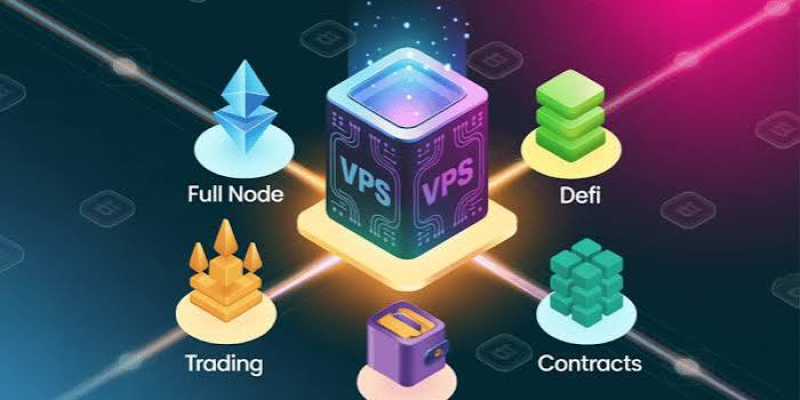
Cryptocurrency markets operate continuously, creating opportunities and challenges for traders in different time zones. Unlike traditional financial markets that may follow specific trading hours, digital asset exchanges generally remain active throughout the week. Prices can move during the night, on weekends, and during public holidays. Traders who depend on automated software may therefore need an environment that remains available even when they are sleeping, working, or away from their computers. This is where crypto vps hosting can become useful.
A Virtual Private Server provides a remotely hosted computing environment with allocated resources. Users can install trading applications, configure automated strategies, and access the server through a remote connection. Once the software is running, it can continue operating independently of the trader’s personal computer.
For people who use automated trading tools, this arrangement can make it easier to maintain continuous application availability. However, it is important to understand what a VPS can and cannot do. It can support the technical operation of trading software, but it cannot guarantee profitable trades, prevent every outage, or remove cryptocurrency market risks.
Why Cryptocurrency Trading Requires Continuous Availability
Cryptocurrency markets do not close at the end of a normal business day. Bitcoin and other digital assets can experience significant price movements at any hour.
A trader who uses manual strategies may not need to monitor every market movement. However, an automated system may be designed to respond when certain conditions are met. If the software stops running, it may not detect the conditions or execute the instructions programmed into it.
For example, a bot may monitor a selected trading pair and check whether a price crosses a predefined level. It may also calculate technical indicators or manage an existing position. These processes depend on the application remaining active and connected to the relevant exchange.
A Crypto VPS can provide a remote environment that supports this continuous operation. The trader does not need to keep a personal computer running throughout the night simply to maintain the application.
How VPS Hosting Keeps Trading Software Running
A VPS operates within a hosting provider’s data center. The provider maintains the underlying physical infrastructure, while the user manages the virtual machine and installed applications.
After purchasing a suitable plan, a trader receives server access details. The trader can connect remotely, install the required operating system tools, and configure the trading application.
Once the application is running, disconnecting from the remote desktop does not necessarily stop the software. The server remains active according to the hosting plan, and the application can continue operating in the background.
A bitcoin vps may be used for a Bitcoin-focused bot that monitors prices or interacts with a supported exchange API. A broader trading environment may run several applications for different cryptocurrency markets.
Users should configure their software to start automatically when appropriate and verify that it recovers safely after a server restart.
Reducing Interruptions Caused by Personal Computers
Personal computers are not always suitable for applications that need to run continuously. A laptop may enter sleep mode, a desktop may restart for updates, or a home internet connection may become unavailable.
Power interruptions can also stop local applications. In areas where electricity or internet connectivity is inconsistent, depending entirely on a home computer can create additional operational difficulties.
A VPS separates the trading application from the user’s local hardware. The trader can switch off a personal computer without necessarily interrupting the remote server.
This does not mean the VPS is immune to downtime. Data centers can experience network failures, maintenance, and hardware problems. The advantage is that the hosting environment is managed independently of the user’s home setup and may offer infrastructure designed for continuous service.
Supporting Automated Trading Strategies
Automated trading systems can follow different types of instructions. Some use simple price thresholds, while others rely on technical indicators, mathematical models, or multiple market conditions.
These systems may need to retrieve information frequently and communicate with exchange APIs. They can also maintain logs, calculate signals, and manage open positions.
A VPS provides a place to run these applications without depending on a personal workstation. Traders can install software libraries, schedule scripts, and configure background processes according to their strategy.
A bitcoin vps can support automated tools that focus on Bitcoin trading pairs. However, the quality of the trading strategy remains separate from the hosting environment. A server cannot turn an ineffective strategy into a profitable one.
The Importance of Network Stability
Continuous trading software needs a dependable connection to the services it uses. If a bot loses access to an exchange API, it may be unable to retrieve current market information or submit requests.
Network stability is therefore an important factor when selecting a VPS. Traders should review the provider’s network infrastructure, uptime history, bandwidth policies, and available data center locations.
Latency may also matter. It refers to the time required for data to travel between the VPS and another system. Lower latency can be helpful for applications that exchange information frequently, but it is only one part of trading performance.
Exchange-side processing, API limits, order queues, market liquidity, and network routing can all affect the result. A provider should not be considered reliable solely because it advertises extremely low latency.
Managing Trading Applications Remotely
Remote access allows traders to manage their server from compatible devices. They can review application status, inspect logs, change settings, and perform maintenance without being physically present at the data center.
This is particularly useful for traders who travel or use several devices. Instead of maintaining a trading application on multiple computers, they can manage it from a centralized server.
Remote management can also make troubleshooting easier. If a bot stops responding, the trader can connect to the server, inspect the process, and restart the application if necessary.
However, remote access should be secured. Strong passwords, multi-factor authentication, and restricted access rules can reduce the risk of unauthorized control.
Running Multiple Bots Around the Clock
Some traders operate several bots for different trading pairs or strategies. One application may monitor Bitcoin, while another tracks selected alternative cryptocurrencies. Additional tools may collect market information or provide alerts.
A VPS can centralize these applications, provided the server has enough CPU, RAM, and storage. Running too many applications on an undersized plan can cause resource shortages and instability.
Users should monitor memory consumption, CPU utilization, disk space, and application logs. If the server regularly approaches its resource limits, they may need to optimize their software or upgrade the hosting plan.
Separate configurations and clear process names can also make it easier to manage several bots. Each application should have its own settings and appropriate API permissions.
Preparing for Unexpected Server Problems
Continuous operation does not mean that technical failures are impossible. A VPS may become unavailable because of provider maintenance, software errors, network interruptions, or unexpected hardware issues.
Traders should prepare their applications to handle these situations. Bots should be able to detect lost connections and attempt controlled reconnection when appropriate.
They should also avoid submitting duplicate orders after an interruption. A well-designed application should check the status of previous requests before repeating an action.
Backups are useful for restoring important configuration files. Monitoring tools can alert users when a server or application becomes unavailable.
A recovery plan should explain how to reconnect, restore settings, replace credentials if necessary, and verify the trading account’s current state.
Security for Continuous Trading
An always-running server must be protected because it may remain connected to exchange accounts for long periods.
Users should install security updates, restrict remote access, and avoid unnecessary applications. API keys should be stored securely and assigned only the permissions required by the trading bot.
Withdrawal permissions should generally remain disabled for trading-only API keys. Users should also review exchange security notifications and account activity.
A Bitcoin VPS should never be treated as a secure wallet simply because it is hosted remotely. Private keys and recovery phrases require special protection and should not be placed on a trading server without a carefully designed security arrangement.
Choosing a VPS for 24/7 Trading
The right hosting plan depends on the number of applications, operating system, CPU requirements, RAM, storage, and network conditions.
Traders should review uptime information, support availability, backup services, renewal prices, and upgrade options. It may be useful to choose a provider that offers a monthly plan so the server can be tested before a longer commitment.
The data center location should be selected based on actual connectivity to the chosen exchange rather than assumptions about geographical distance.
A small bot may require only a modest server. More demanding systems may need additional resources, especially when they process several markets simultaneously.
Conclusion
Crypto VPS hosting can support 24/7 cryptocurrency trading by providing a remote environment where automated applications can remain active independently of a personal computer. It can help traders manage bots, monitor markets, and access their software from different devices.
A bitcoin vps may be suitable for Bitcoin-focused automation, while a broader configuration can support multiple cryptocurrency applications. The most important factors are reliable connectivity, suitable resources, secure configuration, and effective recovery procedures.
A VPS is an infrastructure tool, not a guarantee of trading success. Traders should test their applications, monitor server performance, and maintain appropriate risk controls to support a dependable trading environment.