
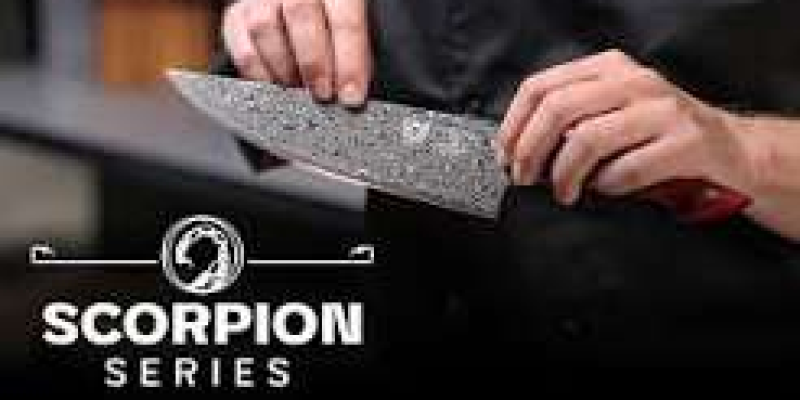
Damascus knives and Cowboy knives can both attract attention, but for completely different visual reasons. With Western knives, the overall design establishes the mood. With Damascus, the blade surface itself becomes part of the visual experience.
That surface has an unusual ability to hold attention.
Damascus Knives Turn Steel Into a Visual Surface
Most blades have relatively simple surfaces.
Damascus knives can be different.
The steel may reveal contrasting lines, flowing shapes, repeating structures, or other visual effects created during the making and finishing process. The result gives the blade movement.
Your eyes do not simply see the edge.
They travel across the surface.
That visual movement is one of the strongest reasons Damascus has become so popular with collectors and specialty knife enthusiasts.
The Pattern Can Change With the Light
One subtle feature of patterned steel is that it does not always look exactly the same under every lighting condition.
A highly reflective surface can emphasize certain areas.
A softer environment can make the darker and lighter sections appear more restrained.
As the viewer changes position, reflections also shift.
This means the knife can appear slightly different from one viewing angle to another.
That quality gives Damascus knives a depth that a flat printed pattern would struggle to reproduce.
Some Patterns Feel Calm
Not every Damascus design has to be dramatic.
Some patterns can appear smooth and flowing, producing a quieter visual effect.
These designs may appeal to someone who prefers craftsmanship that rewards close inspection rather than demanding attention immediately.
Beauty is not necessarily in complexity.
Sometimes it is in repetition and balance.
The eye recognizes the pattern without becoming overwhelmed by it.
Other Damascus Knives Go in the Opposite Direction
Some Damascus designs have stronger contrast or more obvious movement.
They may create a bold appearance across the blade and become the dominant feature of the entire knife.
In these cases, the blade can almost function like a piece of metal artwork.
The design is still a knife, but the surface invites the kind of attention usually associated with decorative objects.
That dual identity is one of the most interesting things about Damascus knives.
Cowboy Knives Give the Pattern a Stronger Frame
Now consider the same type of steel within a Western-inspired design.
Cowboy knives already communicate a recognizable visual theme. When Damascus is added, the patterned blade becomes a focal point within that theme.
The Western design frames the metalwork.
The Damascus surface then gives the blade an additional visual dimension.
This can create an interesting balance between bold shape and detailed surface.
Contrast Is What Makes the Design Work
Good visual design is often about contrast.
A smooth surface can make a detailed element stand out.
A strong silhouette can make an intricate interior detail more noticeable.
This principle is particularly useful when looking at Damascus knives.
The blade pattern may be complex, but it becomes easier to appreciate when the surrounding design gives it room to breathe.
That is why a Damascus blade should not necessarily be surrounded by equally complicated decorative elements.
Sometimes restraint makes the steel more impressive.
The Pattern Becomes Part of the Knife’s Identity
When someone remembers a Damascus blade, they may not remember its exact dimensions.
They may remember how the steel looked.
That is significant.
The visual pattern becomes a shortcut for memory.
It is one reason Damascus knives can stand out in photographs, displays, collections, and online product pages.
The image immediately gives viewers something distinctive to recognize.
Cowboy Knives Can Look Completely Different With Damascus
A Western-inspired knife with conventional-looking steel can communicate one mood.
The same general silhouette with patterned Damascus can communicate something else.
The overall identity becomes more artistic and visually detailed.
That does not erase the Western influence.
Instead, it gives it another expression.
The combination shows how one design category can be reinterpreted through material choice.
The Eye Notices Authentic Details
Small design decisions can have a powerful effect on how a knife is remembered.
The relationship between the blade pattern and the rest of the knife can influence whether the finished product feels balanced.
A pattern that works with the blade geometry can create a cohesive result.
One that clashes with the overall shape may dominate the design for the wrong reasons.
That is why Damascus is not simply about having a pattern.
The pattern needs to belong to the knife.
Why Collectors Keep Looking at Damascus
A good Damascus knife does not always reveal everything immediately.
The first look shows the overall effect.
A closer look reveals smaller details.
A change in lighting reveals different contrasts.
Eventually, the viewer becomes familiar with the specific pattern.
That gradual discovery gives the knife lasting visual interest.
It is similar to the appeal of artwork where the longer you look, the more details become noticeable.
A Cowboy Silhouette With a Moving Blade
Few combinations create as much visual contrast as Western styling and patterned steel.
Cowboy knives provide the recognizable outline.
Damascus knives provide the surface story.
Together, they create a product that can feel traditional and artistic without requiring excessive ornamentation.
For anyone who values the appearance of a handcrafted blade, this combination can be particularly appealing.
KBS Knives Store provides a destination for enthusiasts exploring Western-inspired and Damascus designs, including pieces where traditional knife aesthetics meet distinctive steelwork.
The reason these blades remain memorable is simple: the shape catches your attention, but the pattern gives your eyes a reason to stay.